Why Understanding Your Home's HVAC System Matters
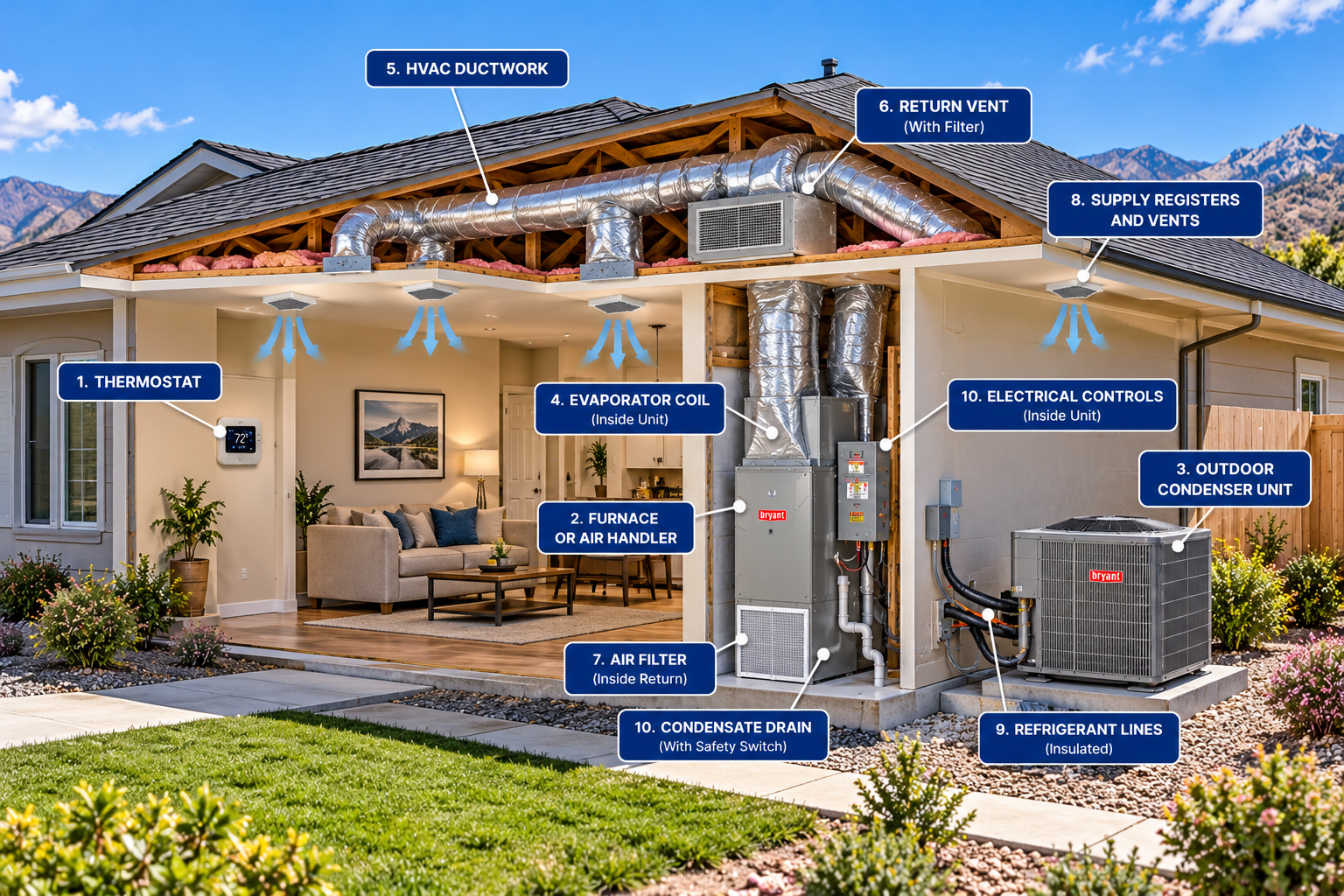
For homeowners in Reno, Sparks, Spanish Springs, and surrounding Northern Nevada, understanding how HVAC components work together can help prevent malfunctions and improve energy efficiency, leading to better HVAC repair and replacement decisions. After all, heating and cooling account for nearly half of your home's energy use, making a well-designed system vital for Northern Nevada's extreme seasonal temperatures. A standard single-story HVAC system includes key components that manage temperature and ensure consistent comfort. Equipment configurations vary by home age and needs, but ten essential components are crucial to understand.
The Thermostat
Your HVAC System's Control Center
The thermostat monitors your home's indoor temperature and communicates with the heating and cooling equipment. When the temperature rises above the selected cooling setting, the thermostat signals the air conditioning system to begin operating. During colder months, it activates the heating system when indoor temperatures fall below the selected heating setting. Modern smart thermostats can provide programmable schedules, remote access, and energy-use information, helping Northern Nevada homeowners manage comfort more efficiently. In a single-story home, thermostat placement is particularly important because direct sunlight, nearby appliances, or poorly positioned vents can produce inaccurate temperature readings and cause unnecessary equipment cycling.
The Furnace or Air Handler
The Heart of Indoor Air Circulation
The furnace or air handler is one of the primary components responsible for circulating conditioned air throughout your home. Many homes in Reno and Sparks use natural gas furnaces combined with central air conditioning, while others use electric air handlers paired with heat pumps. Gas furnaces generate heat through combustion and transfer that heat into the indoor airstream through a heat exchanger. Air handlers rely on an internal blower to circulate air through connected ductwork and may include electric heating components. These units are frequently installed in garages, utility closets, or attics. When the blower motor, heat exchanger, or other internal components malfunction, homeowners may experience weak airflow, inconsistent temperatures, unusual noises, or complete heating and cooling interruptions.
Exterior HVAC Unit
Removing Heat From Your Home
The outdoor condenser unit is the large metal cabinet commonly found beside a residential home. In a conventional central air conditioning system, this equipment contains the compressor, condenser coil, condenser fan, and associated electrical components. Rather than creating cold air, the system absorbs heat from inside the home and releases that heat outdoors through the refrigeration process. The compressor circulates refrigerant between the indoor and outdoor equipment, allowing heat to move away from conditioned living spaces. During Northern Nevada's hot summer months, outdoor units must operate under demanding conditions. Dirt buildup, blocked airflow, damaged electrical components, or refrigerant problems can reduce cooling performance. Keeping the surrounding area clear and scheduling professional maintenance helps support efficient operation and equipment reliability.
The Evaporator Coil
Where Indoor Cooling Happens
The evaporator coil is typically installed inside the air handler or directly above or beside the furnace. During cooling operation, refrigerant flowing through the coil absorbs heat from the indoor air passing across its surface. The blower then distributes the cooled air into the home's ductwork. This process also removes some moisture from indoor air as condensation forms on the coil. Although Northern Nevada generally experiences relatively dry conditions, moisture removal remains part of normal air conditioning operation. Restricted airflow, dirt accumulation, or improper refrigerant conditions can prevent the evaporator coil from functioning correctly. In severe cases, the coil may freeze, reducing cooling capacity and potentially causing water-related problems when the ice melts.
HVAC Ductwork
The Hidden Network Connecting Every Room
Supply ductwork transports heated or cooled air from the furnace or air handler into individual rooms throughout the house. In single-story homes, ducts may run through attics, crawlspaces, or concealed ceiling spaces before connecting to supply registers. Properly designed ductwork helps distribute conditioned air according to each room's heating and cooling requirements. According to the U.S. Department of Energy, typical homes may lose approximately 20% to 30% of the air moving through their duct systems because of leaks, holes, and poorly connected ducts. In Northern Nevada, ductwork passing through unconditioned attics may also experience significant temperature differences. Proper sealing, insulation, sizing, and installation can improve overall HVAC performance, reduce wasted energy, and support more consistent indoor temperatures.
Air Filters and Return Vents
Protecting Equipment and Airflow
Return air ducts complete the circulation process by transporting indoor air back toward the furnace or air handler. Once the air returns, it typically passes through a filter before being heated or cooled again. Proper return airflow is essential because the HVAC system must move an appropriate volume of air in both directions to operate efficiently. When return ducts are undersized, blocked, or poorly positioned, rooms may experience uneven temperatures, airflow restrictions, and pressure imbalances. In a single-story home, centrally located returns are common, although larger homes may require additional return pathways. Homeowners should avoid blocking return grilles with furniture or other household items. Restricted return airflow can negatively affect comfort and place additional strain on HVAC equipment.
The Final Destination for Conditioned Air
The Final Destination for Conditioned Air
Air filters capture airborne particles as air circulates through the HVAC system, helping protect internal equipment from excessive dust and debris. Depending on the filter type, they may also capture pollen, pet dander, and other particles that affect indoor air quality. The U.S. Department of Energy reports that replacing a dirty, clogged filter with a clean one can reduce air conditioner energy consumption by approximately 5% to 15%, depending on system conditions. For Northern Nevada homeowners, regular filter inspections are especially useful during dusty periods and wildfire smoke events. However, higher-efficiency filters must be compatible with the equipment's airflow requirements. Filters that create excessive resistance can reduce system performance, making proper selection and replacement intervals important.
Supply Registers and Vents
Controlling Air Distribution
Supply registers are the visible openings installed in floors, walls, or ceilings that allow heated and cooled air to enter individual rooms. Their location, size, and airflow characteristics influence how effectively the HVAC system maintains comfortable temperatures. Even in a single-story home, rooms can experience different heating and cooling demands based on window exposure, insulation, ceiling height, and location within the building. For example, west-facing bedrooms may absorb substantial afternoon heat during Reno's summer months. Properly balanced airflow helps address these differences. Homeowners sometimes close multiple registers to redirect air, but excessive restrictions can increase duct pressure and interfere with system performance. Persistent temperature differences may indicate ductwork, airflow, insulation, or equipment-sizing issues requiring professional evaluation.
Refrigerant Lines
Connecting Indoor and Outdoor Cooling Equipment
Refrigerant lines connect the indoor evaporator coil with the outdoor air conditioning or heat pump equipment. These lines transport refrigerant through the system, allowing heat to be absorbed indoors and released outdoors during cooling operation. A typical residential split system uses two refrigerant lines: a smaller liquid line and a larger insulated suction line. Proper installation, insulation, and refrigerant charging are essential for efficient operation. Refrigerant leaks or incorrect charge levels can reduce cooling capacity, increase energy consumption, and damage system components. Modern residential systems also use different refrigerant types depending on equipment design and manufacturing date. Because refrigerants require specialized handling and equipment, inspection, charging, and repairs should be performed by qualified HVAC technicians.
Condensate Drains and Electrical Controls
Supporting Safe Operation
Although less visible than the furnace or outdoor condenser, condensate drainage and electrical controls are essential to HVAC reliability. During air conditioning operation, moisture collected at the evaporator coil drains through a condensate line. Blockages may trigger safety switches, interrupt cooling, or cause water damage. Electrical controls coordinate equipment operation through components such as circuit boards, relays, capacitors, contactors, and wiring. These components control when motors start, how the system responds to thermostat commands, and whether certain safety conditions have been met. A failing capacitor or contactor, for example, can prevent the outdoor unit from starting even when the thermostat is requesting cooling. Routine professional inspections help identify developing electrical and drainage problems before they lead to larger failures.
Royal is Here to Help
Your home's HVAC system is a coordinated network of equipment designed to keep indoor temperatures comfortable throughout Northern Nevada's changing seasons. From the thermostat and furnace to the evaporator coil, outdoor condenser, ductwork, and electrical controls, every component contributes to overall system performance. Royal Heating & Air LLC is a locally owned heating and cooling company serving Reno, Sparks, Spanish Springs, and surrounding communities. Our team brings more than 50 years of combined HVAC experience and knowledge to residential heating and cooling projects. Whether you're considering a complete HVAC system replacement, planning a new installation, scheduling maintenance, or troubleshooting an existing system, Royal Heating & Air can help evaluate your home's needs.
Call us today to learn how we can help guide you on partial versus full HVAC installations, replacements, and repairs for your Northern Nevada one-storied home.
Latest Posts